Hillards Growing Not Going Report page 4 of 28 previous next
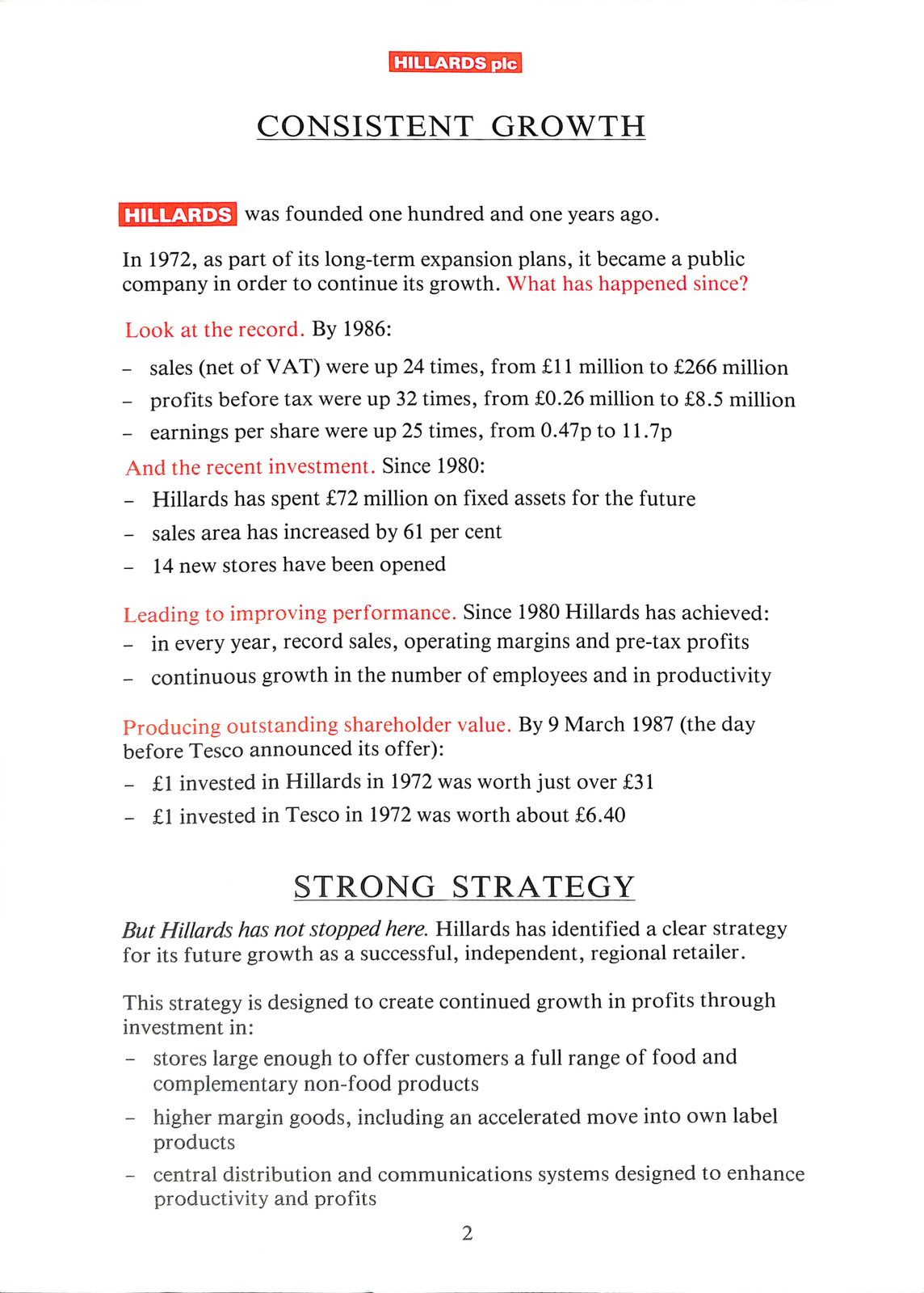
Below is what the machine read from this scan, three times over. They are kept separate rather than merged: where they disagree, the disagreement is itself worth seeing, and a single tidy transcription would hide it.
The left column is raw output. The right is the same text after the repairs that make it searchable — joining letter-spaced words, mending split ones.
Text already in the scan
    C O N S I S T E N T  G R O W T H


    ■   w a s   f o u n d e d  o n e    h u n d r e d a n d   o n e y e a r s a g o .

    In    1972,  as    part  of its   long-term expansion     plans,   it   became a public
    company in         order   to   continue   its    growth. What    has   happened since?

    Look    at   the   record.    By   1986:
    -  sales     (net  of   VAT) were up       24 times, from     £11 million     to £266 million
    -  profits   before     tax were    up 32      times,   from    £0.26   million  to £8.5 million
    -  earnings per share were up 25 times, from 0.47p to 11.7p

    And     the  recent     investment.   Since   1980:
    -  Hillards  has spent £72 million          on fixed     assets for       the future
    -  sales     area  has   increased    by   61     per cent
    -   14  new     stores   have    been   opened

    Leading to improving performance. Since 1980 Hillards has achieved:
    -  in every      year,   record     sales, operating     margins and pre-tax      profits
    -   continuous     growth      in   the number     of     employees     and in productivity

    Producing outstanding shareholder value. By 9 March 1987 (the day
    before Tesco      announced     its     offer):
    -   £1  invested    in     Hillards in  1972     was  worth     just over £31
    -   £1  invested    in     Tesco    in 1972    was    worth about    £6.40


                               S T R O N G             S T R A T E G Y

    But Hillards        has not stopped here.  Hillards has identified      a     clear strategy
    for its future      growth as a  successful,   independent,             regional retailer.

    This strategy is designed to create continued growth in profits through
    i n v e s t m e n t i n :
    - stores large enough to offer customers a full range of food and
        complementary           non-food       products
    -  higher    margin      goods, including  an accelerated move into              own label
   products
- central distribution and communications systems designed to enhance
   productivity and profits
        2
CONSISTENTGROWTH ■ wasfoundedonehundredandoneyearsago . In 1972, as part of its long-term expansion plans, it became a public company in order to continue its growth. What has happened since? Look at the record. By 1986: - sales (net of VAT) were up 24 times, from£11 million to £266million - profits before tax were up 32 times, from£0.26 million to £8.5million - earnings per share were up 25 times, from 0.47p to 11.7p And the recent investment. Since1980: - Hillards has spent£72 million on fixed assets for the future - sales area has increased by 61 per cent - 14 new stores have been opened Leading to improving performance. Since1980 Hillards has achieved: - in every year, record sales, operating margins and pre-tax profits - continuous growth in the number of employees and in productivity Producing outstanding shareholder value. By 9March1987 (the day before Tesco announced its offer): - £1 invested in Hillards in 1972 was worth just over£31 - £1 invested in Tesco in 1972 was worth about£6.40 STRONGSTRATEGY But Hillards has not stopped here. Hillards has identified a clear strategy for its future growth as a successful, independent, regional retailer. This strategy is designed to create continued growth in profits through investmentin : - stores large enough to offer customers a full range of food and complementary non-food products - higher margin goods, including an accelerated move into own label products - central distribution and communications systems designed to enhance productivity and profits 2
Read by machine
    HILLARDS pic


    CONSISTENT GROWTH


                   was founded one hundred and     one years ago.

In 1972, as part of its long-term expansion plans, it became a public
company in order to continue its growth. What has happened since?

    Look at    the record. By 1986:

— sales (net of VAT) were up 24 times, from £11 million to £266 million
— profits before tax were up 32 times, from £0.26 million to £8.5 million
— earnings per share were up 25 times, from 0.47p to 11.7p
And the recent investment. Since 1980:
    —    Hillards has  spent £72 million on  fixed assets for the future
    —    sales area has increased by 61 per  cent
    —    14new stores  have been opened

Leading to improving performance. Since 1980 Hillards has achieved:
    —          year,   record sales, operating margins and pre-tax profits
— continuous growth in the number of employees and in productivity

Producing outstanding shareholder value. By 9 March 1987 (the day
before Tesco announced its offer):
— £1 invested in Hillards in 1972 was worth just over £31
— £1 invested in Tesco in 1972 was worth about £6.40


STRONG STRATEGY

But Hillards has not stopped here. Hillards has identified a clear strategy
for its future growth as a successful, independent, regional retailer.

This strategy is designed to create continued growth in profits through
investment in:
— stores large enough to offer customers a full range of food and
   complementary non-food products
— higher margin goods, including an accelerated move into own label
   products
— central distribution and communications systems designed to enhance
   productivity and profits
HILLARDS pic CONSISTENT GROWTH was founded one hundred and one years ago. In 1972, as part of its long-term expansion plans, it became a public company in order to continue its growth. What has happened since? Look at the record. By 1986: - sales (net of VAT) were up 24 times, from£11 million to £266million - profits before tax were up 32 times, from£0.26 million to £8.5million - earnings per share were up 25 times, from 0.47p to 11.7p And the recent investment. Since1980: - Hillards has spent£72 million on fixed assets for the future - sales area has increased by 61 per cent - 14new stores have been opened Leading to improving performance. Since1980 Hillards has achieved: - year, record sales, operating margins and pre-tax profits - continuous growth in the number of employees and in productivity Producing outstanding shareholder value. By 9March1987 (the day before Tesco announced its offer): - £1 invested in Hillards in 1972 was worth just over£31 - £1 invested in Tesco in 1972 was worth about£6.40 STRONG STRATEGY But Hillards has not stopped here. Hillards has identified a clear strategy for its future growth as a successful, independent, regional retailer. This strategy is designed to create continued growth in profits through investment in: - stores large enough to offer customers a full range of food and complementary non-food products - higher margin goods, including an accelerated move into own label products - central distribution and communications systems designed to enhance productivity and profits
Read by machine, contrast corrected highest quality of the three
    HILLARDS pic


    CONSISTENT GROWTH


                   was founded one hundred and     one years ago.

In 1972, as part of its long-term expansion plans, it became a public
company in order to continue its growth. What has happened since?

    Look at    the record. By 1986:

- sales (net of VAT) were up 24 times, from £11 million to £266 million
— profits before tax were up 32 times, from £0.26 million to £8.5 million
— earnings per share were up 25 times, from 0.47p to 11.7p
And the recent investment. Since 1980:
         Hillards has  spent £72 million on  fixed assets for the future
    —    sales area has increased by 61 per  cent
    —    14new stores  have been opened

Leading to improving performance. Since 1980 Hillards has achieved:
    —          year,   record sales, operating margins and pre-tax profits
— continuous growth in the number of employees and in productivity

Producing outstanding shareholder value. By 9 March 1987 (the day
before Tesco announced its offer):
— £1 invested in Hillards in 1972 was worth just over £31
— £1 invested in Tesco in 1972 was worth about £6.40


STRONG STRATEGY

But Hillards has not stopped here. Hillards has identified a clear strategy
for its future growth as a successful, independent, regional retailer.

This strategy is designed to create continued growth in profits through
investment in:
— stores large enough to offer customers a full range of food and
   complementary non-food products
— higher margin goods, including an accelerated move into own label
   products
— central distribution and communications systems designed to enhance
   productivity and profits
HILLARDS pic CONSISTENT GROWTH was founded one hundred and one years ago. In 1972, as part of its long-term expansion plans, it became a public company in order to continue its growth. What has happened since? Look at the record. By 1986: - sales (net of VAT) were up 24 times, from£11 million to £266million - profits before tax were up 32 times, from£0.26 million to £8.5million - earnings per share were up 25 times, from 0.47p to 11.7p And the recent investment. Since1980: Hillards has spent£72 million on fixed assets for the future - sales area has increased by 61 per cent - 14new stores have been opened Leading to improving performance. Since1980 Hillards has achieved: - year, record sales, operating margins and pre-tax profits - continuous growth in the number of employees and in productivity Producing outstanding shareholder value. By 9March1987 (the day before Tesco announced its offer): - £1 invested in Hillards in 1972 was worth just over£31 - £1 invested in Tesco in 1972 was worth about£6.40 STRONG STRATEGY But Hillards has not stopped here. Hillards has identified a clear strategy for its future growth as a successful, independent, regional retailer. This strategy is designed to create continued growth in profits through investment in: - stores large enough to offer customers a full range of food and complementary non-food products - higher margin goods, including an accelerated move into own label products - central distribution and communications systems designed to enhance productivity and profits